To those of you who think representation isn’t important, Lupita Nyong’o inspired a young black girl to not bleach her skin.
I repeat, Lupita Nyong’o inspired a young black girl to not bleach her skin.
Lupita received a letter from a young black girl that said she was about to buy Dencia’s Whitenicious cream to lighten her skin when Lupita appeared and saved her.
So, stop telling POC they should get over it when they’re being misrepresented.
Representation DOES matter. Seeing Lupita onscreen can save and bring hope to the lives of many young black girls.
Concept: an apocalyptic or post apocalyptic tv show centred on a group of disabled protagonists
Must include:
-enough details about how they survive that no one can call it “unrealistic”
-mental and physical disabilities
-a character who isn’t necessarily contributing to the survival of the group, but is not abandoned or looked down upon
-at least one character whose disability is actually less of a problem for them now that the world is ending/ended (example: autistic character who used to be constantly overstimulated but no longer is)
Optional features:
-abled person says “the only disability in life is a bad attitude” and gets told where to stuff it
-character who abled people think isn’t worth helping because of their disability, but actually has at least one skill essential to the survival of the group
-every time an abled person says something ignorant, all present disabled people look into the camera like they’re on the office
x: a variable used to represent something unknown.
We’ve seen an influx of questions about how to write stories based around characters of color, disability, non-binary, etc. when the author does not fall into these categories. Rather than have these posts take over the site, we’ve decided to compile a list of resources to help our fellow writers become more educated about writing what they do not immediately know. However, this list is not the end-all-be-all of knowledge; one should always try to learn from someone with first hand experience in any topic. The world is constantly growing and changing, and because of that, there will always be more to learn. The admins at Plotline Hotline want to help writers form respectful, informed, and realistic characters that broaden the narrow range we see in literature today.
*Be wary that some of the topics listed below contain sensitive material. Reader discretion is advised.*
As always, the links I found to be especially apt will be in bold. Topics are listed alphabetically, excepting the “other” section.
I hope that this list will provide topics a writer may not initially think to research when writing. If there are any resources that you think would be fitting for this list, please let us know! We want to have as many helpful sources as possible to maximize learning opportunities.
Sometimes you have to code characters, either because the terms they use to describe themselves don’t exist (like secondary world fantasy), or because they haven’t found the words themselves yet (undiagnosed illnesses and disabilities). But if at all possible, you should make it clear who these people are and own that you’re putting them in the story.
Even if you actively can say that somebody is part of a certain group, you still have to make sure you’re not -washing them in the narrative. Be it whitewashing, straightwashing, abledwashing, or any sort of situation where you say one thing, but the story itself doesn’t reflect that.
Here are some things to consider that will help you make it obvious that…
This character is PoC
Describe:
Skin tone (just don’t use food metaphors)
Hair texture/colour (especially black hair)
Most commonly eaten foods at home
Microaggressions
Cultural clues that they would have (either assimilated or not, because both will have tells)
Their opinion of white people/things outside of their experience
This character is LGBTQA+
Describe:
Who they’re attracted to (or lack thereof)/past crushes (or lack thereof)
Their circle of friends (seriously, we travel in packs, I know like five straight people)
For trans characters: hormones, binders, packers, breast forms, tucking. Also, for more subtle clues, pronoun asking, euphoria at gender affirming things (like them being proud of their particularly dapper, feminine, or ‘I have no idea what gender that is but I like it’ style), dislike of off-gender things (like complaining about somebody getting them something that doesn’t match how they like to present)
The actual orientation that they are, for crying out loud
Their opinion of straight people/things outside of their experience
This character is disabled
Describe:
Their disability. Preferably in the actual labels, or make up your own labels for a secondary world fantasy
Any mobility, hearing, or speaking aids
Behaviours that come with the disability (ie- stimming such as rocking or flapping for autistic/ADHD people, navigating through appropriately wide paths for wheelchairs/walkers, sitting on one side of the group conversations to make sure their good ear catches it, etc)
Levels of aid needed and any accommodations
Avoiding things that trip them up (like somebody autistic not wanting to go where it’s crowded, a wheelchair user avoiding curbs, a Deaf person making sure there’s a sign language interpreter at a concert, somebody with celiac avoiding gluten like the plague)
Plan cancelling because it’s a bad day, or having to leave early because the environment is bad
Medications, doctors, etc, if applicable
Self care rituals for after a long day or during a flare up
Their opinion of abled people/things outside of their experience
This character is mentally/chronically ill
Describe:
Their symptoms, from good to messy, consistently
Their energy levels, as many of us use the spoon theory
Self care rituals they practice during flare ups or after hard days
Medication, doctors, therapies, etc
Cancelling plans because a bad day came up, or having to leave early because the environment is bad
Triggers and their individual reaction to their triggers
Their opinion of well people/things outside of their experience
And so on. These lists are not meant to be exhaustive at all, but they are meant to get you thinking about how you need to go about describing representation.
One thing to note: you can go about establishing representation in one of two ways. Either have the characters noting their differences, or them nothing others’ differences. Neil Gaiman’s Anansi Boys describes white skin when it appears, because within the narrator’s world, black skin is the norm. But others note their own differences. It’s all about their character.
Either one requires a lot of careful thought and sensitivity readers, but both are valid* options for owning** representation.
Followers, feel free to add more!
*Do be aware that some groups are chronically under-represented when it comes to the actual word of their identity. Bisexual people hardly have characters say the word as their identity. Autistic people also hardly have characters say the word as their identity. Be very careful of not having characters talk about themselves if the group is prone to being coded but not explicitly represented
**You have to actually own it and say they’re that when people put all the clues you left together
Thanks for reading! If you liked this content, please consider supporting me on patreon. It’ll get you access to a bunch of cool stuff!
Taika Waititi actively made sure not only Māori but other indigenous identities, specifically aboriginal Australians, were represented in his film since they were filming on their ancestral lands.
he invited the Yugambeh mob to welcome them and even had a Māori Kaumātua (elder) to perform a Karakia, “a kind of open-up ceremony from [his] side of things as well.”
he hired an Aboriginal water company to supply that water on set
he wanted to make space for indigenous filmmakers and thus had 8 indigenous interns on set to learn and gain film experience
yes, Taika is a lot of fun and super goofy. But that doesn’t mean Ragnarok doesn’t stand for something bigger. Taika is not only the first Polynesian man to direct a superhero movie, but he is also the first indigenous person to do so too. While he is barrel of laughs and a half, please don’t forget what Taika brought to the MCU. (x) (x) (x)
I’m an Indian girl and I’ve identified with Hermione since I was tiny. I remember being told as a child that I couldn’t ever be Hermione because I wasn’t white. I’m happy to see that fandom spaces nowadays don’t just allow people like me to identify as our favorite characters – they also encourage it. I’m happy that so many of our beloved canon characters are being headcanoned as various races. It’s well past time! Thank you HP fans for making the wizarding world a safe space!
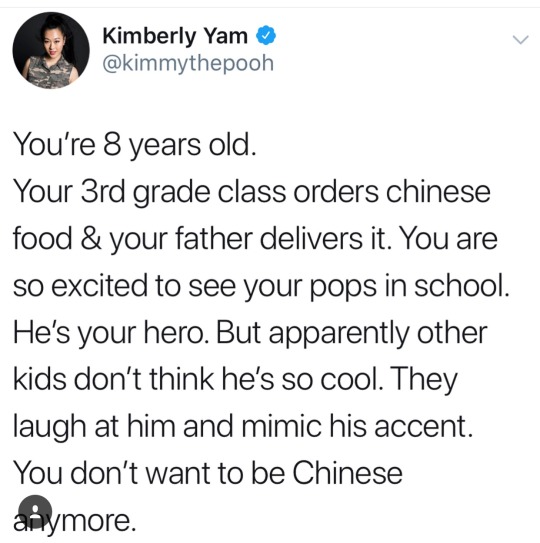
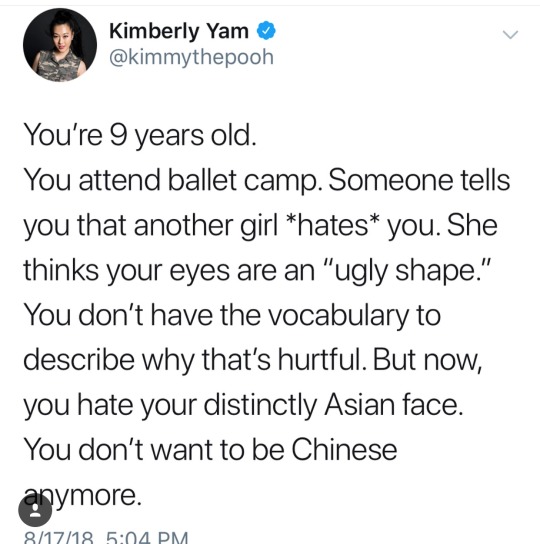
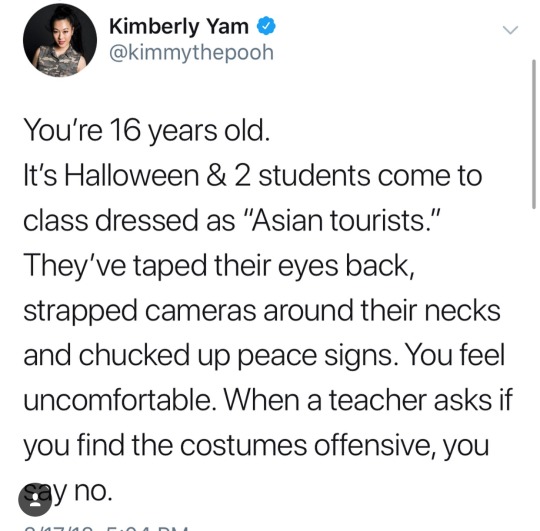
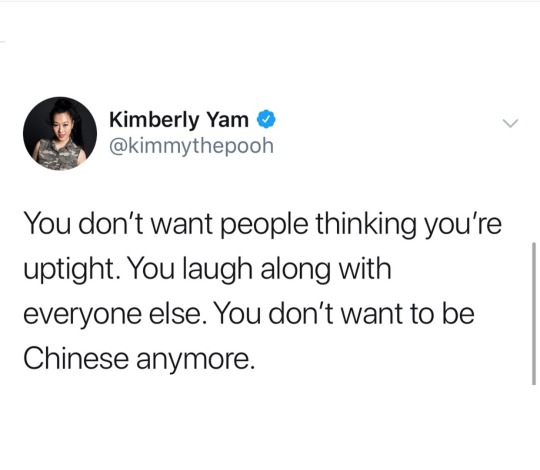
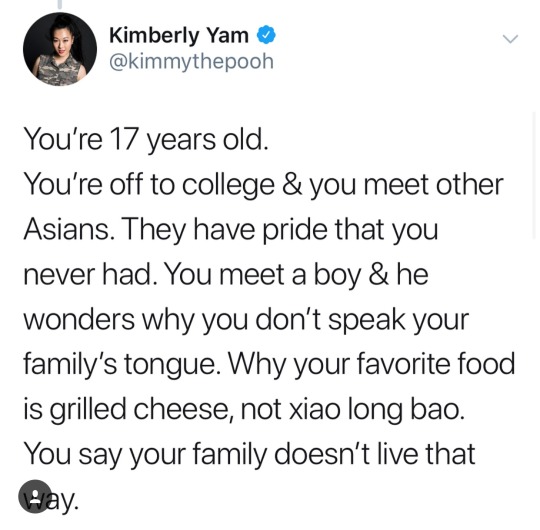
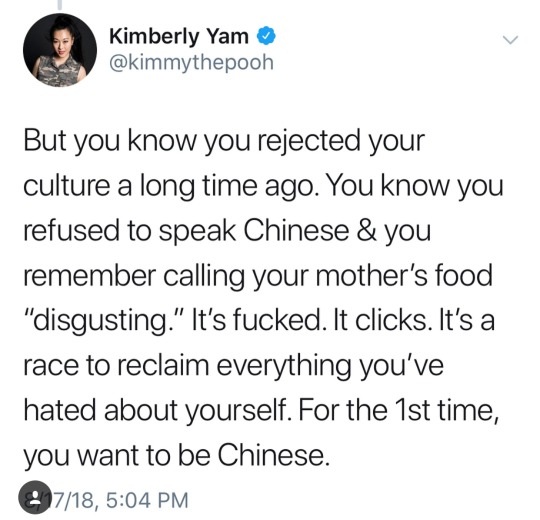
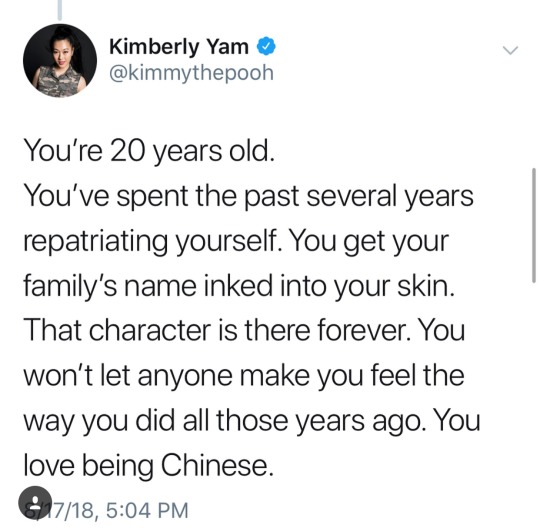
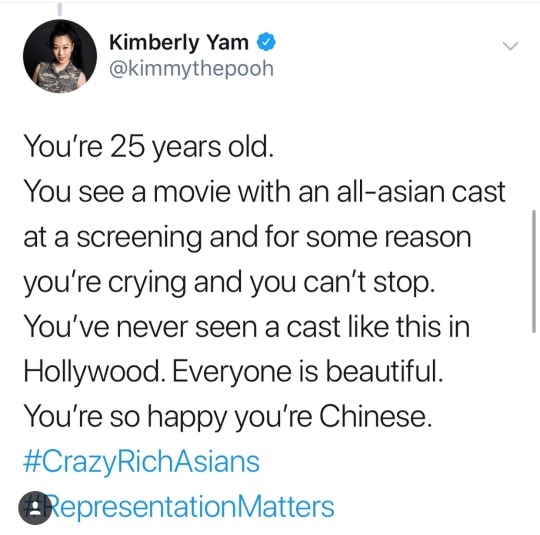
y’all keep saying shit like “oh why is there no dark skin asians or some shit” yeah i get it but at this point you don’t understand how much SHAME there is to being be asian. we as a collective group are ashamed of being together becaude we’re afraid. we’ve never had a community. we’ve always been alone bc we’re ASHAMED. when scarjo or some white ass person replaces an asian, majority of us are pissed internally but we can’t do shit because we don’t have a voice. this movie is the FIRST ALL ASIAN MOVIE. you don’t understand how impactful that is to us. you can’t understand the joy unless ur asian 💛💛💛



 Headcanonsandmore