Protagonist now remembers key facts about important people. He no longer develops convenient amnesia between cutscenes.
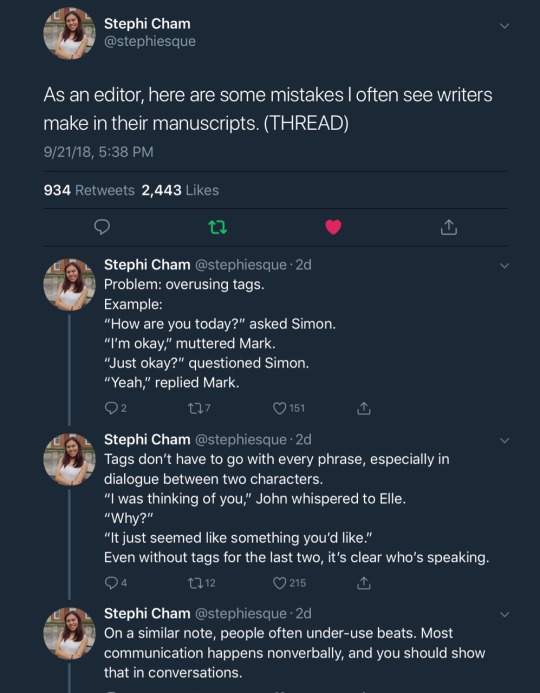
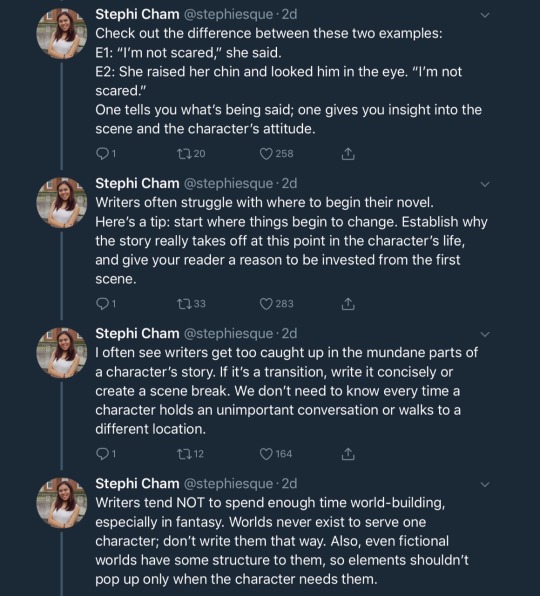
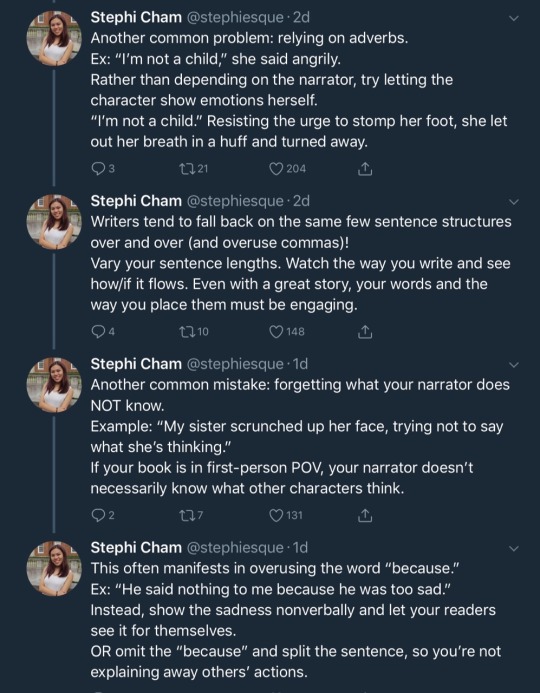
Protagonist now has a cooldown on certain adverbs. Adverbs have been buffed by 30% to compensate.
Developer note: Adverbs are important to writing but they are sometimes overused. This change keeps adverbs relevant while encouraging the use of adjectives and verbs.
The horse now has a name.
Deuteragonist snark power has been increased to 150, up from 75.
Characters now no longer reference the previous version’s climate and have been updated to react appropriately to the currently set season.
Solved a glitch where supernumerary limbs would sometimes emerge during complex physical interactions.
Should no longer display “[insertnamehere]” during conversations and narration. All of such occurrances have been replaced with the appropriate tags.
Conversation continuity has been improved. Characters will no longer inappropriately respond with lines from previous iterations of the narrative.
All references to “Event A” have been purged to reflect changes in narrative structure.
Something I found that makes a scene easier and longer:
Writing the dialogue first.
I never used to do this, but one night it was really late and I was half asleep but I wanted to get some work done. So I decided to just fill in the dialogue I wanted for the scene.
I found myself with close to 1000 words of dialogue. (I obviously tagged who said what, how it was said, etc.)
When I came back to the document, I just filled in the action, the background, descriptions and plot.
I ended up with between 3000-4000 words in one sitting.
Maybe this won’t work for everyone, hell maybe someone else has already pointed this out, but I just wanted to share this writing tip.
I’ve done this! It totally works.
A lot of times, my scenes come to me in fully formed dialogue first. I’ve started getting into the habit of furiously writing it all down, whether it’s in a word doc, a notebook, or the notes section on my phone. Honestly, it’s seriously saved my life doing it and I think it’s also helped me create some of my better work as well
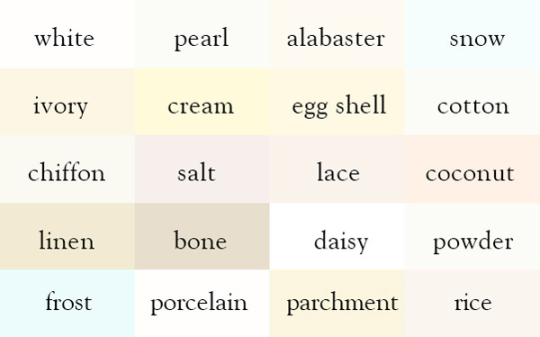
THAT FIRST SITE IS EVERY WRITER’S DREAM DO YOU KNOW HOW MANY TIMES I’VE TRIED WRITING SOMETHING AND THOUGHT GOD DAMN IS THERE A SPECIFIC WORD FOR WHAT I’M USING TWO SENTENCES TO DESCRIBE AND JUST GETTING A BUNCH OF SHIT GOOGLE RESULTS
Can you maybe do a post on the elements of a kiss scene?
Certainly, and I’m sorry it took so long – I have several post
requests I’m working on, and thankfully, I finally have a bit of
spare time to answer them.
1. Keep things understated (especially in regards to
tongues.)
“Our tongues tangled and went to war in our locked mouths,
battling madly for dominance.”
No. Okay? Just no. The thought of my tongue
“tangling” with someone else’s is an image I would really
prefer to unsee, yet I have seen it and countless variants in both
published literature and fics.
Similarly, ask anyone whose ever had an unsolicited tongue jammed
down their throat: it’s not pleasant, and readers shouldn’t
be lead to believe it is.
My advice with kissing scenes is to focus predominantly on lips,
and maybe add a little tongue as an afterthought. Like so:
“His lips were warm and soft. They parted slightly,
allowing my tongue to slip inside.”
If you want something a bit more passionate:
“Our bodies pressed together heatedly against the wall,
breathing heavily as our lips pressed together. I could taste
our shared breath, feel the thud of our combined heartbeat as we
fumbled to take off one another’s clothes.”
You could even try, “His tongue pressed between parted
lips in ticklish kitten licks,” which, granted, sounds a
little awkward without context, but isn’t nearly as wince-worthy as
the image of it being jammed in like a tongue depressor.
Literally and metaphorically, tone down the tongue.
2. Don’t get overly floral about taste.
“Her lips tasted like peaches and honey.”
No, they didn’t. And her pussy didn’t taste like coconut
cream pie, either, or anything else your quintessential sub par male
author or pre-teen smut writer might dream up.
Unless she’s literally just been eating peaches and honey, or
she’s using some kind of fancy lubricant, her lips are going to
taste like lips, and her pussy is going to taste like pussy. Full
stop.
Granted, that isn’t very romantic, which is why I like to focus
on other sensations besides taste. For example:
“Her lips were soft, almost silken, and pillowy against my
own. I could feel the soft tickle of her breath beneath my
nose, fingers carding through her hair as we breathed each other in.”
I occasionally actually will have my characters be eating or
drinking something before hand, also, just to add an extra layer of
sensation play to the scene.
For example:
“His lips were still sweet with milk and honey from his
afternoon tea as Alexander kissed his husband goodbye.”
But my advice is keep these instances short and sweet: nothing
can kill the mood like a good dose of purple prose.
3. Focus on how the characters are feeling.
Here’s the thing: as I understand it, kissing someone you’re
not all that into at the moment is awkward.
You don’t know what to do with your hands, your hyper aware of
everything your body is doing, and you’re really concerned with how
you might taste. You’re also a lot more prone to noticing
unseemly things about your partner, like bad morning breath, bad
skin, weird grunting breathing, et cetera.
The same goes for writing: too much physicality can make a
kissing scene feel painfully awkward, whereas, just as in real life,
a good kiss will be one in which the best part is how your partner
makes you feel.
Focus on how your POV character is feeling, and add physical
details here and there to make the scene feel grounded:
“Warmth blossomed in Luna’s chest, sparks igniting as
Artemis leaned in close, lips brushing together, tentatively, for the
first time. The smell of her perfume, of the soft, peachy scent
of her conditioner, was dizzying, butterflies dancing in her stomach.
But warmth consumed her as she leaned into the kiss, Arty’s
lips impossibly soft against her own.”
I find this approach much more effective than describing each
motion in painstaking detail.
Bonus: Learn from the masters.
I don’t claim to be the paramount expert on writing, kissing, or
any combination of the two.
So without further ado, here are what are considered to be some of literature’s finest makeout scenes for your benefit and inspiration:
“It was like that. Almost the last thing I remember was
standing with Daisy and watching the moving-picture director and his
Star. They were still under the white-plum tree and their faces were
touching except for a pale, thin ray of moonlight between. It
occurred to me that he had been very slowly bending toward her all
evening to attain this proximity, and even while I watched I saw him
stoop one ultimate degree and kiss at her cheek.”
– F. Scott Fitzgerald, The Great Gatsby
“I turned around and found her face, and her mouth was already waiting like a question. I’m not gonna make it out to be something that it wasn’t: It was perfect—Coley’s soft lips against the bite of the liquor and sugary Coke still on our tongues. She did more than just not stop me. She kissed me back.”
– Emily M. Danforth, The Miseducation of Cameron Post
“She drew him toward her with her eyes, he inclined his face toward hers and lay his mouth on her mouth, which was like a freshly split-open fig. For a long time he kissed Kamala, and Siddhartha was filled with deep astonishment as she taught him how wise she was, how she ruled him, put him off, lured him back… each one different from the other, still awaiting him. Breathing deeply, he remained standing and at this moment he was like a child astonished by the abundance of knowledge and things worth learning opening up before his eyes.”
– Hermanne Hesse, Siddhartha
“Cath closed the book and let it fall on Levi’s chest, not sure what happened next. Not sure she was awake, all things considered.The moment it fell he pulled her into him. Onto him. With both arms. Her chest pressed against his, and the paperback slid between their stomachs.
Cath’s eyes were half closed, and so were Levi’s and his lips only looked small from afar, she realized, because of their doll-like pucker. They were perfectly big, really, now that she had a good look at them. Perfectly something. He nudged his nose against hers, and their mouths fell sleepily together, already soft and open. When Cath’s eyes closed, her eyelids stuck. She wanted to open them. She wanted to get a better look at Levi’s too-dark eyebrows, she wanted to admire his crazy, vampire hairline—she had a feeling this was never going to happen again and that it might even ruin what was left of her life, so she wanted to open her eyes and bear some witness.
But she was so tired. And his mouth was so soft.And nobody had ever kissed Cath like this before. Only Abel had kissed her before, and that was like getting pushed squarely on the mouth and pushing back.
Levi’s kisses were all taking. Like he was drawing something out of her with soft little jabs of his chin. She brought her fingers up to his hair, and she couldn’t open her eyes.”
-Rainbow Rowell, Fangirl
ROMEO
If I profane with my unworthiest hand This holy shrine, the gentle fine is this: My lips, two blushing pilgrims, ready stand To smooth that rough touch with a tender kiss.
JULIET Good pilgrim, you do wrong your hand too much, Which mannerly devotion shows in this; For saints have hands that pilgrims’ hands do touch, And palm to palm is holy palmers’ kiss.
ROMEO Have not saints lips, and holy palmers too?
JULIET Ay, pilgrim, lips that they must use in prayer.
ROMEO O, then, dear saint, let lips do what hands do; They pray, grant thou, lest faith turn to despair.
JULIET Saints do not move, though grant for prayers’ sake.
ROMEO Then move not, while my prayer’s effect I take. Thus from my lips, by yours, my sin is purged.
JULIET Then have my lips the sin that they have took.
ROMEO Sin from thy lips? O trespass sweetly urged! Give me my sin again.
My clients are about 50/50 native and non-native English speakers, and non-native English speakers are pretty much the only ones who say “yes” when I ask them a question.
Native English speakers almost always say “yeah” or “sure”, unless it’s for emphasis. (“Is now a good time?” “Sure” vs “Is this your first baby?” “Yes he is!!”)
I’ve noticed that with yes and no. Both of those sound abrupt by themselves (“no” to a lesser extent than “yes”). “Did you do it?” “Yes”. To me, that would sound like someone who’s annoyed by the question, perhaps because it’s been asked repeatedly. For yes/no to work, they have to be followed by something else, like your example, or by a word like sir or ma’am.
I’ve reblogged a post like this before but I suspect this is an indication that the meanings of yes (and yeah) and no are actually changing – that English is undergoing a shift from a two-form affirmative-negative system to something else, such as an echo system (like Irish or Chinese uses) (except that in English we don’t have to repeat the whole verb, we can just use the auxiliary do).
I.e. this is why, I think, it’s so common for people to use “yeah, no” to deny something and “no, yeah, totally” to affirm something – “yeah” and “no” by themselves are too ambiguous, so we have to reinforce them by, for example, when we deny something, affirming the negative (“Yeah…”) and then denying the positive (“…no”), or when we affirm something, by denying the negative (“No…”) and then affirming the positive (“…yeah, totally!”). Maybe this kind of thing will stick around, or maybe it’ll shift to more of an echo system – I find myself saying “Yeah, I do” and “No, I don’t” a lot more than just the words “Yeah” and “No” by themselves.
This situation reminds me of how, when the Latin demonstratives were turning into articles, writers had to add additional decitic words to ille, illa, and illud in order to make their reference sufficiently specific – e.g. just “that man” by itself was starting to mean “the man”, so to mean “that man” they had to say things like “that aforementioned man” or “that particular man”.
Good tips for if your dialogue isn’t sounding realistic to your ear!
x: a variable used to represent something unknown.
We’ve seen an influx of questions about how to write stories based around characters of color, disability, non-binary, etc. when the author does not fall into these categories. Rather than have these posts take over the site, we’ve decided to compile a list of resources to help our fellow writers become more educated about writing what they do not immediately know. However, this list is not the end-all-be-all of knowledge; one should always try to learn from someone with first hand experience in any topic. The world is constantly growing and changing, and because of that, there will always be more to learn. The admins at Plotline Hotline want to help writers form respectful, informed, and realistic characters that broaden the narrow range we see in literature today.
*Be wary that some of the topics listed below contain sensitive material. Reader discretion is advised.*
As always, the links I found to be especially apt will be in bold. Topics are listed alphabetically, excepting the “other” section.
I hope that this list will provide topics a writer may not initially think to research when writing. If there are any resources that you think would be fitting for this list, please let us know! We want to have as many helpful sources as possible to maximize learning opportunities.



 Headcanonsandmore