First, I write down very roughly what needs to happen in this scene.
For example, take an early scene from my wip. The main character’s mentor has just died in the previous scene. And what’s worse, he’s killed by the magical Library she loves so much. What needs to happen in this next scene?
She brings the terrible news of the mentor’s death and the Library’s betrayal to
the mentor’s widow (who gives her a key to the Library, minor detail).
She brings the news to the major, who is responsible of anything concerning the Library and who is indirectly the reason the mentor went into the Library in the first place.
At the end of this scene, the second main character is briefly introduced.
Then I start asking myself as many questions as I can.
What does the Main Girl Character (MGC) feel after her mentor’s death?
What does the MGC do with the key she gets from the widow?
How and when does the widow give her the key?
What is the first thing the MGC does when the mentor dies?
What does the widow do when she sees the MGC and the mentor?
How does the widow react? What does she feel? Did she expect it to happen someday? Does she stay icy calm or does she scream? (pieta)
What does the widow look like?
What is the widow like, as a person?
How does the MGC know she has to go to the major? Is there some kind of police, or is he the mentor’s boss or something?
Does the MGC trust the major?
Can she trust the major?
What is the major like, as a person? Nice? Belittling?
What does the MGC tell the major? What does he want to know?
What kind of new information does the MGC get out of this conversation?
What does the office of the major look like? Where is it?
What kind of a person is the Main Boy Character (MBC)?
What is the MBC wearing?
What does the MBC say to the MGC?
What was his reaction when he heard the news? How did he feel?
How does the major react? How does he feel?
How far is it from the major to the MGC’s home? How much time does the MGC have to inform the MBC and how much time does the MBC have to react and to comfort the MGC? I just realise the MBC already knows (probably from her parents?) because otherwise he wouldn’t be waiting for her at the major’s office.
How did the MGC’s parents tell the MBC? Why would they tell him? Maybe he called her house or he came by because he knew she went to see the Library but he doesn’t know yet that it killed the mentor?
See, I’m already filling my page so that it doesn’t look that intimidatingly empty.
Next, it’s answers time. I go through all the questions and make up a satisfying answer. Sometimes I get it right straight away, sometimes I have to brainstorm for four pages before hitting the suitable solution.
Since this is still preparation,I don’t have to worry about the quality of my writing style – I’m just thinking on paper. Often, this paradoxally means I write relaxed and I end up using whole bits of my preparation in my first draft.
After I have answered all the questions I want (often some become obsolete by answering other questions), I write out the scene again, in bullets or telegraph style, but with the detail and richness I have found in my answers. That usually takes me one page.
And only THEN I start writing my first draft. I see everything perfectly clear in my head and I even have bits of text I can use from my prep, so writing the first draft is way more chill than just writing it cold.
I do this before every scene, but you can also use this technique only when you get stuck or when you have to write a scene you’re dreading. You would think it’s inefficient and it takes too much time, but this technique keeps my thoughts focussed on my story (I’m a daydreamer) and it keeps the imposter syndrome at bay.
On average, my prep is 1,5 times the length of my written scene, but this process makes my writing so much richer. Not everything I make up in the Q&A phase ends up in my scene, especially questions like “what does the place look like”, “what is the character wearing” or “how long does it take them to walk from A to B”, but I find I can write the scene better if I know the answer, even if the reader doesn’t need to know.
Anyway, this is how I do it. Thanks for listening to my TED talk!
I’m gonna tag a few people who I admire, who I hope are interested. Feel free to ignore me if you aren’t.
Sticking a landing will royally fuck up your joints and possibly shatter your ankles, depending on how high you’re jumping/falling from. There’s a very good reason free-runners dive and roll.
Hand-to-hand fights usually only last a matter of seconds, sometimes a few minutes. It’s exhausting work and unless you have a lot of training and history with hand-to-hand combat, you’re going to tire out really fast.
Arrows are very effective and you can’t just yank them out without doing a lot of damage. Most of the time the head of the arrow will break off inside the body if you try pulling it out, and arrows are built to pierce deep. An arrow wound demands medical attention.
Throwing your opponent across the room is really not all that smart. You’re giving them the chance to get up and run away. Unless you’re trying to put distance between you so you can shoot them or something, don’t throw them.
Everyone has something called a “flinch response” when they fight. This is pretty much the brain’s way of telling you “get the fuck out of here or we’re gonna die.” Experienced fighters have trained to suppress this. Think about how long your character has been fighting. A character in a fist fight for the first time is going to take a few hits before their survival instinct kicks in and they start hitting back. A character in a fist fight for the eighth time that week is going to respond a little differently.
ADRENALINE WORKS AGAINST YOU WHEN YOU FIGHT. THIS IS IMPORTANT. A lot of times people think that adrenaline will kick in and give you some badass fighting skills, but it’s actually the opposite. Adrenaline is what tires you out in a battle and it also affects the fighter’s efficacy – meaning it makes them shaky and inaccurate, and overall they lose about 60% of their fighting skill because their brain is focusing on not dying. Adrenaline keeps you alive, it doesn’t give you the skill to pull off a perfect roundhouse kick to the opponent’s face.
Swords WILL bend or break if you hit something hard enough. They also dull easily and take a lot of maintenance. In reality, someone who fights with a sword would have to have to repair or replace it constantly.
Fights get messy. There’s blood and sweat everywhere, and that will make it hard to hold your weapon or get a good grip on someone.
A serious battle also smells horrible. There’s lots of sweat, but also the smell of urine and feces. After someone dies, their bowels and bladder empty. There might also be some questionable things on the ground which can be very psychologically traumatizing. Remember to think about all of the character’s senses when they’re in a fight. Everything WILL affect them in some way.
If your sword is sharpened down to a fine edge, the rest of the blade can’t go through the cut you make. You’ll just end up putting a tiny, shallow scratch in the surface of whatever you strike, and you could probably break your sword.
ARCHERS ARE STRONG TOO. Have you ever drawn a bow? It takes a lot of strength, especially when you’re shooting a bow with a higher draw weight. Draw weight basically means “the amount of force you have to use to pull this sucker back enough to fire it.” To give you an idea of how that works, here’s a helpful link to tell you about finding bow sizes and draw weights for your characters. (CLICK ME)
If an archer has to use a bow they’re not used to, it will probably throw them off a little until they’ve done a few practice shots with it and figured out its draw weight and stability.
People bleed. If they get punched in the face, they’ll probably get a bloody nose. If they get stabbed or cut somehow, they’ll bleed accordingly. And if they’ve been fighting for a while, they’ve got a LOT of blood rushing around to provide them with oxygen. They’re going to bleed a lot.
Here’s a link to a chart to show you how much blood a person can lose without dying. (CLICK ME)
If you want a more in-depth medical chart, try this one. (CLICK ME)
Hopefully this helps someone out there. If you reblog, feel free to add more tips for writers or correct anything I’ve gotten wrong here.
How to apply Writing techniques for action scenes:
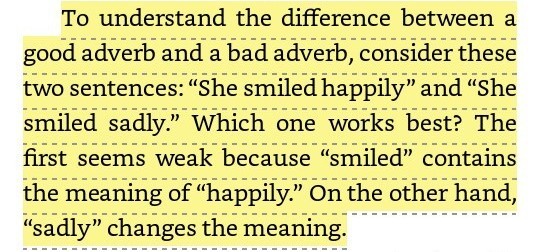
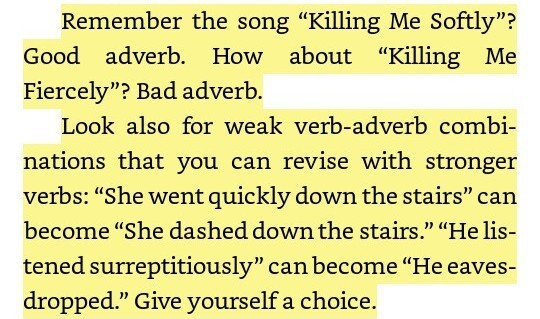
– Short sentences. Choppy. One action, then another. When there’s a lull in the fight, take a moment, using longer phrases to analyze the situation–then dive back in. Snap, snap, snap. – Same thing with words – short, simple, and strong in the thick of battle. Save the longer syllables for elsewhere. – Characters do not dwell on things when they are in the heat of the moment. They will get punched in the face. Focus on actions, not thoughts. – Go back and cut out as many adverbs as possible. – No seriously, if there’s ever a time to use the strongest verbs in your vocabulary – Bellow, thrash, heave, shriek, snarl, splinter, bolt, hurtle, crumble, shatter, charge, raze – it’s now. – Don’t forget your other senses. People might not even be sure what they saw during a fight, but they always know how they felt. – Taste: Dry mouth, salt from sweat, copper tang from blood, etc – Smell: OP nailed it – Touch: Headache, sore muscles, tense muscles, exhaustion, blood pounding. Bruised knuckles/bowstring fingers. Injuries that ache and pulse, sting and flare white hot with pain. – Pain will stay with a character. Even if it’s minor. – Sound and sight might blur or sharpen depending on the character and their experience/exhaustion. Colors and quick movements will catch the eye. Loud sounds or noises from behind may serve as a fighter’s only alert before an attack. – If something unexpected happens, shifting the character’s whole attention to that thing will shift the Audience’s attention, too. – Aftermath. This is where the details resurface, the characters pick up things they cast aside during the fight, both literally and metaphorically. Fights are chaotic, fast paced, and self-centered. Characters know only their self, their goals, what’s in their way, and the quickest way around those threats. The aftermath is when people can regain their emotions, their relationships, their rationality/introspection, and anything else they couldn’t afford to think or feel while their lives were on the line.
Do everything you can to keep the fight here and now. Maximize the physical, minimize the theoretical. Keep things immediate – no theories or what ifs.
If writing a strategist, who needs to think ahead, try this: keep strategy to before-and-after fights. Lay out plans in calm periods, try to guess what enemies are thinking or what they will do. During combat, however, the character should think about his options, enemies, and terrain in immediate terms; that is, in shapes and direction. (Large enemy rushing me; dive left, circle around / Scaffolding on fire, pool below me / two foes helping each other, separate them.)
Lastly, after writing, read it aloud. Anyplace your tongue catches up on a fast moving scene, edit. Smooth action scenes rarely come on the first try.
Hiya! Thanks for your question. Writing an engaging story is complicated, but it can be done.
First off, there are so many aspects to writing a gripping story. Honestly, it can’t be done in five steps (and certainly not in one blog post). To prevent a boring story you need strong characters, an exciting plot, good pacing… the list goes on and on.
So rather than type out a 3000+ word response, I’m going to give you a mini-masterpost of the key aspects of writing a non-boring story with links to other LGF posts. Here you go:
I wrote a fic recently and the word count for the first
draft came to about 40,000 words – roughly the length of a novella or ficlet.
And that’s fine because I wasn’t striving for a novel or a 100K slow-burn coffee shop AU.
But coming to edit my first draft I realised something about
myself. I am an underwriter. My fic
could actually be at least 10k (maybe 20k) longer. Of course it’s not all about word count, it’s about the story,
but in this case a smaller word count isn’t because I’m a fantastically efficient storyteller it’s
because I’ve missed out a lot of stuff. Like, Important Stuff.
So as I set out to add muscle to the skin and bones I’ve
already created in draft one I thought I’d share five tips for my fellowunderwriters
to help you flesh out your writing too.
1) Make sure to describe the place and space in
which the action happens.
There are quite a few places in my first draft where there’s
no indication as to where things are taking place– or there is, but it’s the
bare minimum and not really enough to build up a clear picture.
This probably because as the writer I know exactly what the place looks like so I make the
assumption that a bare minimum description will mean the reader knows too.
Now I’m not saying go into masses of detail about what your
settings look like. In some cases it’s not useful to describe setting in a lot of detail (e.g. during really
fast paced action sequences) but doing a
verbal sketch of the space is essential for putting your characters in context and reader understanding.
I really is a fine balance (which is why beta readers are your friend!) But
definitely go back to your setting descriptions if you’re an
underwriter, they might need some work.
2) Make sure to describe your character’s appearance.
Similar to the above point – you know what your characters look like, but unless you describe them,
the reader won’t.
It’s fair to say that descriptions are open to reader
interpretations, but that doesn’t mean you shouldn’t describe them in a healthy
amount of detail. So you might try to nail down some of the interesting quirks
about your characters to help the reader build a picture – not only will it
help the readers understanding, it’ll boost your word count too!
Note: This one functions a little differently in
a fic because the readers are probably familiar with how the character looks,
but there is nothing wrong with adding your interpretation (or even reminding
them, especially if the characters are from a book.)
3) Include character reactions outside of what they
say out loud.
Real life conversations aren’t just about the stuff that
comes out of our mouths. So much of human interaction is about body language –
so include it in your writing! Saying that the character covers their mouth
with their hand when they talk suggests shyness. While another character crossing
their arms shows they’re defensive -perhaps because they’re feeling threatened.
In real life we don’t always say what we mean – but a lot of the time our actions give away what we’re really thinking. By including these actions around dialogue
writers can influence how we as readers view characters and how we interpret interactions
between characters. And it can boost your word count too.
The big stuff:
4) Check your pacing.
When you write it feels like your scene is taking place over
hours, days, weeks because when you’re writing it takes time. Reading, on the
other hand, is much quicker. A seasoned reader can fly through a 100 page novel
in a few hours – a seasoned writer can spend hours writing a 100 words.
When you read back your writing, make sure to check your
pacing. You might just find that the Impossible Task you set for your
characters at the start of the story is suddenly resolved within the next fifty
pages. To boost your word count you
might want to start by adding more obstacles between the character and their goal.
For example; your character has to find an object such as a
precious jewel. Sounds relatively easy, right? But what if the jewel is lost in
the mines of an ancient people, amongst thousands of other treasures that look
very similar? What if no one has found this jewel because it’s guarded by a
fire breathing dragon? What if the ancient mines and dragon are located in a
mountain which is miles and miles away across dangerous lands? What if your
characters need to enlist the help of someone with a very specific skill set?
You take one simple objective (finding the jewel) and you
put into play a series of obstacles that must be overcome in order to complete
the objective. Your underwriting tendencies, like mine, might just mean that there
aren’t enough metaphorical (or real) dragons in your story!
5) Sub-plots.
A sub-plot is a smaller scale plot – often involving
the supporting characters – which runs secondary to the main plot. It can be
directly linked to the main plot, i.e. the info provided in the subplot
directly influences events in the main plot. Or it can simply be linked through
place, time or themes of the overall story (e.g. Hermione’s elf rights campaign
‘S.P.E.W’ in Harry Potter and the OoTP is linked to the overall theme of
oppression.)
Sub-plots are great because they can serve as some respite
from a traumatic main plot; your character is fighting a war (main plot) but
also fighting and failing (in hilarious ways) to win the affection of their love
interest (sub-plot).
Plus, sub-plots can also help with characterisation, can
cause your main character to have the moment of realisation which allows them
to overcome the obstacles they face in the main plot and is generally a better
reflection of real life! Sub-plots often centre on side-kicks and other
characters – people who might not be as devoted to the end goal as the
protagonist is. In fact, well written
side characters seemingly live their own lives with their own goals. You might choose to showcase
this in your sub-plot by letting the conflict of interest cause more
problems for the protagonist to overcome.
Either way you could find your word count sky rockets as soon
as you add in a few clever sub-plots.
I recently wrote a character with survivor’s guilt for a very different situation, but it was a very new and interesting experience for me. Actually, it took me a while to realize that he even had it, funnily enough. When I was writing scenes in which he was involved, or writing chapters from his perspective, everything came out a lot angrier and more intense than I expected. Halfway through the story, I finally realized that he was lashing out due to his grief and pain.
That doesn’t mean that is what survivor’s guilt always looks like, however. In fact, I think that guilt and grief can be tied very well together, and look very similar. But the reaction shown is going to differ depending on the character. For my character, a strong-willed person with a bit of a temper already and a lot of bitterness, anger was a natural reaction to what he was feeling. To him, he was angry that this terrible thing happened, and that he lost so much because of it, and that now he had to keep on living with all that loss when it might have been easier to just die along with his friends.
If you are familiar with the stages of grief:
A lot of those emotions and symptoms are very applicable to survivor’s guilt. Emotional outbursts, panic, denial, shock, anger, as well as parts of the recovery can all be a part of what they are dealing with.
Think specifically about your character, and what makes the most sense for them. They may not go through every point on the graph. Maybe, if they are a quieter type of person, they just feel numbness, or denial, or despair. Maybe, if they are more tempestuous like my character was, they lash out. Perhaps they feel panic, or get paranoid and put up extreme precautions to ensure that nothing like that ever happens again, to the point where things get a little out of control. Maybe they blame themselves, feeling a lot of self-hatred or going over the scene over and over in their minds and trying to figure out what they could have done differently.
Even though your character’s killing of this person was unwilling, they may still blame themselves, or think “I should have been stronger/better/smarter” etc, or think “If I have done this differently, then we never would have been in this situation”, even if realistically there was no way of knowing what was going to happen.
Another common reaction is the “It should have been me” reaction. The survivor may feel that the person or people who died were better people than themselves, or that they had more to live for, or even that their actions were what got them into trouble in the first place and that they should have paid the price.
Remember that their guilt will tell them to think terrible things, even if they aren’t true and aren’t realistic. The mind will go to great lengths to blame itself when it is entrenched in such terrible levels of despair- even if there was logically nothing they could have done, guilt will always tell them that they should have done better.
Another thing to remember is that they will likely be experiencing grief at the same time. After all, they just lost someone close to them. That is an entire presence that will be forever missing from their lives, and to make it worse, they feel like it’s their fault. It’s okay if sometimes they just miss this person, and that’s enough to deal with.
Finally, don’t neglect the recovery side of the graph. With support, your character can learn to cope with what happened. Any one of the things listed above can be catalysts for a new phase for your character, emotionally. For my character, it was reassurance and support from his friends, particularly the introduction of a new character, who had a very positive influence. Your character may still carry the loss and the guilt with them, but it was will someday be a lighter burden.
I fuckin LOVE dialogue as a first line. I adore it. whenever I flip open a book and the first line is dialogue I’m like hell YES this is my SHIT
there’s lists of, uh, TOP TEN WAYS YOU SHOULD NEVER START YOUR NOVEL EVER and “opening with dialogue” is always on them
the gist being that it’s bad bc the reader doesn’t care about this character yet so why are they gonna care about this dialogue, right, they don’t have any context for it, you should start with something that gets the reader invested and emotionally pulled in, so on, so forth
(and I’m not here to argue or call bullshit on these lists or anything…… 99% of the time, the reasons listed of why you should Maybe Not Do The Thing are perfectly valid concerns and dangers that should be taken into consideration)
(this post is more a ramble about personal preference with a nice moral at the end)
(and definitely not a TOP TEN REASONS “TOP TEN WAYS YOU SHOULD NEVER START YOUR NOVEL EVER” LISTS ARE LIES AND SLANDER post god could you imagine)
but yeah, for me, dialogue opening lines pull me right the fuck in emotionally. for real. nine times out of ten they’ll yank me in and have me engaged instantaneously. always have, probably always will
(like come on. have y’all never just started eavesdropping right in the middle of some total strangers’ conversation on the bus. especially if it’s somethin weird. it’s so good)
but ANYWAY, the moral is uhhhh
whatever Mortal Writing Sin you wanna commit, there’s probably at least one weirdo out there possibly named logan who digs it
do whatever the fuck you want, honestly
you can write an opening scene that does everything every advice page tells you to do with an opening scene and it can still be shit
you can write an opening scene doing everything every advice page tells you NEVER to do with your opening scene and it can still be fabulous and engaging
if you can pull it off, literally who cares
“if you can pull it off, literally who cares“ is the only real writing rule
Back to School: How to Get an A*/8 or 9 in an English Lit Essay!
Happy September, everyone!
As we all get our gears in motion to start a new year, I thought I would share my top tips for scoring the highest marks in English Literature essays.
(P.S. Lots of these tips are applicable to other subjects too)
1. Don’t write about the character as if they are real
Unfortunately, this is a common error in English Lit essays. It is absolutely imperative to remember that a character is not a person, but is a construct of the writer in order to present an idea or theme. No matter the question, you should be linking your answer back to the writer’s ideas and theme of the text, even if it doesn’t seem obvious what the theme is on the first inspection of the question. Using the author’s name frequently in your essay will demonstrate that you recognise the character is not a real person – ‘Shakespeare portrays Macbeth as a tragic hero, as defined by Aristotle as…’
2. Don’t analyse the plot
Avoid analysing the plot or when things happen in the text. Don’t write ‘When X happens it makes us think Y’. Instead:
Analyse the writer’s use of language, structure and form to create meaning
Do a close language analysis of specific words/phrases, including a sound analysis (plosives, assonance, etc.)
Do a structural analysis of what happens when and why that’s important (Freytag’s pyramid)
Do an analysis of form (stage directions, dramatic monologue, etc.)
3. Keep your answer relevant throughout
You need to be explicitly answering the question – not going off on a tangent nor trying to change the question to suit an answer that you want to write. One way of avoiding this is by starting each paragraph with a topic sentence, summarising what that paragraph is going to be about and how it answers the question. Another method is simply by rewording the question into your answer at the start and end of every paragraph. At least. For greater impact, include synonyms of the word, which can also help with the readability of your answer.
4. Avoid PEE/PEEL/etc. where you can
Thousands of students are taught the same, basic Point-Evidence-Explain (or variant) analytical paragraph structure. If you want to stand out, show academic strength, and achieve the highest marks then you must break free from the chains of PEE! (This also applies for your introduction format. ‘In this essay, I will argue…’ gets pretty dull after reading it 100 times)
For my students, I will be teaching them to write What-How-Why paragraphs:
WHAT has the writer done?
HOW have they done it?
WHY have they done it/is it effective?
This way, your focus is always on why the writer has chosen to use that specific language/structure/form, but it allows you to be creative in crafting your response. Being able to discuss the ‘why’ of literature is the key to unlocking the highest grades. Reading through examiners’ reports this summer has made one thing clear – it is not enough to merely spot linguistic devices or structural features. You must explain why the writer has chosen them and why that is an effective choice (or not).
5. Avoid sweeping statements about context
The main advice here is to only include comments about the context of the text if it adds to the analytical point that you are making. They should not be a bolt-on sentence, but they should enhance your answer.
Further, sweeping claims like ‘All Jacobean women were oppressed by society’ is far too vague. On the other hand, a comment like ‘Lady Macbeth is a disturbing example of womanhood because she denies her gender at a time where the role of a woman was clear-cut, even patriarchal, in Jacobean society’ suggests that you have a greater understanding of how context can influence the writer’s choices.
6. A plan is your best friend
Always, always make time to plan your answer. A method I recommend is, first, circling the key words in the question (character/theme, what you are asked to do, where in the text you are asked to look, etc.). Secondly, write all of your ideas down onto the page, highlighting parts from the extract if you have that in front of you. Finally, select a judicious number of points that you are going to talk about (quality not quantity here) and number the order in which you are going to make them.
If you are writing a comparative essay, each paragraph must start and end with a comparative point about whatever it is you are comparing (characters/themes/etc.) I suggest the following format:
‘X is presented in both text A and text B. However, in A the author uses devices 1 and 2 to demonstrate X. On the other hand, in B, the author demonstrates X via use of devices 3 and 4.’ Then write one paragraph for each text. Repeat this again for another similarity. And again for a third – if you think that is appropriate.
When I was nine, possibly ten, an author came to our school to talk about writing. His name was Hugh Scott, and I doubt he’s known outside of Scotland. And even then I haven’t seen him on many shelves in recent years in Scotland either. But he wrote wonderfully creepy children’s stories, where the supernatural was scary, but it was the mundane that was truly terrifying. At least to little ten year old me. It was Scooby Doo meets Paranormal Activity with a bonny braw Scottish-ness to it that I’d never experienced before.
I remember him as a gangling man with a wiry beard that made him look older than he probably was, and he carried a leather bag filled with paper. He had a pen too that was shaped like a carrot, and he used it to scribble down notes between answering our (frankly disinterested) questions. We had no idea who he was you see, no one had made an effort to introduce us to his books. We were simply told one morning, ‘class 1b, there is an author here to talk to you about writing’, and this you see was our introduction to creative writing. We’d surpassed finger painting and macaroni collages. It was time to attempt Words That Were Untrue.
You could tell from the look on Mrs M’s face she thought it was a waste of time. I remember her sitting off to one side marking papers while this tall man sat down on our ridiculously short chairs, and tried to talk to us about what it meant to tell a story. She wasn’t big on telling stories, Mrs M. She was also one of the teachers who used to take my books away from me because they were “too complicated” for me, despite the fact that I was reading them with both interest and ease. When dad found out he hit the roof. It’s the one and only time he ever showed up to the school when it wasn’t parents night or the school play. After that she just left me alone, but she made it clear to my parents that she resented the fact that a ten year old used words like ‘ubiquitous’ in their essays. Presumably because she had to look it up.
Anyway, Mr Scott, was doing his best to talk to us while Mrs M made scoffing noises from her corner every so often, and you could just tell he was deflating faster than a bouncy castle at a knife sharpening party, so when he asked if any of us had any further questions and no one put their hand up I felt awful. I knew this was not only insulting but also humiliating, even if we were only little children. So I did the only thing I could think of, put my hand up and said “Why do you write?”
I’d always read about characters blinking owlishly, but I’d never actually seen it before. But that’s what he did, peering down at me from behind his wire rim spectacles and dragging tired fingers through his curly beard. I don’t think he expected anyone to ask why he wrote stories. What he wrote about, and where he got his ideas from maybe, and certainly why he wrote about ghosts and other creepy things, but probably not why do you write. And I think he thought perhaps he could have got away with “because it’s fun, and learning is fun, right kids?!”, but part of me will always remember the way the world shifted ever so slightly as it does when something important is about to happen, and this tall streak of a man looked down at me, narrowed his eyes in an assessing manner and said, “Because people told me not to, and words are important.”
I nodded, very seriously in the way children do, and knew this to be a truth. In my limited experience at that point, I knew certain people (with a sidelong glance to Mrs M who was in turn looking at me as though she’d just known it’d be me that type of question) didn’t like fiction. At least certain types of fiction. I knew for instance that Mrs M liked to read Pride and Prejudice on her lunch break but only because it was sensible fiction, about people that could conceivably be real. The idea that one could not relate to a character simply because they had pointy ears or a jet pack had never occurred to me, and the fact that it’s now twenty years later and people are still arguing about the validity of genre fiction is beyond me, but right there in that little moment, I knew something important had just transpired, with my teacher glaring at me, and this man who told stories to live beginning to smile. After that the audience turned into a two person conversation, with gradually more and more of my classmates joining in because suddenly it was fun. Mrs M was pissed and this bedraggled looking man who might have been Santa after some serious dieting, was starting to enjoy himself. As it turned out we had all of his books in our tiny corner library, and in the words of my friend Andrew “hey there’s a giant spider fighting a ghost on this cover! neat!” and the presentation devolved into chaos as we all began reading different books at once and asking questions about each one. “Does she live?”— “What about the talking trees” —“is the ghost evil?” —“can I go to the bathroom, Miss?” —“Wow neat, more spiders!”
After that we were supposed to sit down, quietly (glare glare) and write a short story to show what we had learned from listening to Mr Scott. I wont pretend I wrote anything remotely good, I was ten and all I could come up with was a story about a magic carrot that made you see words in the dark, but Mr Scott seemed to like it. In fact he seemed to like all of them, probably because they were done with such vibrant enthusiasm in defiance of the people who didn’t want us to.
The following year, when I’d moved into Mrs H’s class—the kind of woman that didn’t take away books from children who loved to read and let them write nonsense in the back of their journals provided they got all their work done—a letter arrived to the school, carefully wedged between several copies of a book which was unheard of at the time, by a new author known as J.K. Rowling. Mrs H remarked that it was strange that an author would send copies of books that weren’t even his to a school, but I knew why he’d done it. I knew before Mrs H even read the letter.
Because words are important. Words are magical. They’re powerful. And that power ought to be shared. There’s no petty rivalry between story tellers, although there’s plenty who try to insinuate it. There’s plenty who try to say some words are more valuable than others, that somehow their meaning is more important because of when it was written and by whom. Those are the same people who laud Shakespeare from the heavens but refuse to acknowledge that the quote “Some are born great, some achieve greatness, and some have greatness thrust upon them“ is a dick joke.
And although Mr Scott seems to have faded from public literary consumption, I still think about him. I think about his stories, I think about how he recommended another author and sent copies of her books because he knew our school was a puritan shithole that fought against the Wrong Type of Wordes and would never buy them into the library otherwise. But mostly I think about how he looked at a ten year old like an equal and told her words and important, and people will try to keep you from writing them—so write them anyway.
*sobs for like the umpteenth time this day and reblogs the fuck out of this*
Reblog, Facebook, and sending it to myself so I can always find it…
This brings back so many memories of my childhood stories that I may just weep.
“I wont pretend I wrote anything remotely good, I was ten and all I could come up with was a story about a magic carrot that made you see words in the dark, but Mr Scott seemed to like it.” Are you KIDDING me, that is the most beautiful metaphor about writing and you used the man’s own PEN as the central symbol I’m crying and I can’t even imagine how he felt sdlfkajsdf GOD.
I am not a writer. No, as I have yet to learn the skill of sorting ten-thousand disjointed and fragmented ideas into coherent narrative without growing frustrated and impatient and quitting before I can barely begin…
…but this gives me a flicker of hope that such a thing may change someday.
“But mostly I think about how he looked at a ten year old like an equal and told her words are important, and people will try to keep you from writing them—so write them anyway.”
As a critiquer, your job is not to “make this piece of writing better” but to understand what the writer wants to achieve and help them to achieve it
Applies beyond writing as well.
Also applies to editing. I was recently talking to another writer whose editor (at a publisher) almost destroyed her desire to keep writing. Writers, know the signs of a shitty editor versus one who actually wants to help you achieve your vision, and don’t be afraid to ask for a different one. (Or fire a bad one if you’re indy.)


 Headcanonsandmore